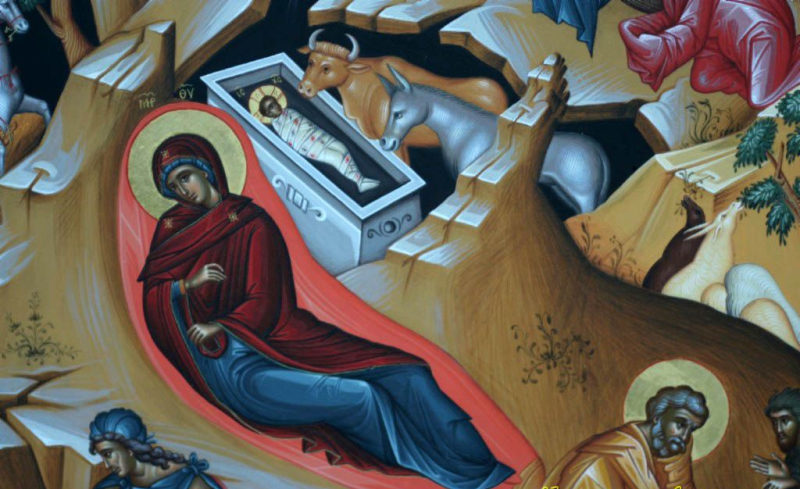
In the Christian tradition of both east and west, the twelve days of Christmas refer to the period from Christmas Day to Theophany. The days leading up to Christmas were for preparation; a practice affirmed in the Orthodox tradition by the Christmas fast that runs from November 15 to Christmas day. The celebration of Christmas […]
Archives for 2009
Ten Steps to a Better Prayer Life
Author: Anonymous Designate A Prayer Space: Whether it is in the corner of your desk or a little stand in your room, it is important to have a place where you can put your Bible, Icons, etc. Dedicate the use of that space for God alone. Acquire A Time: Incorporate prayer in your routine and […]
The Proskomide — Service of Preparation of the Holy Gifts
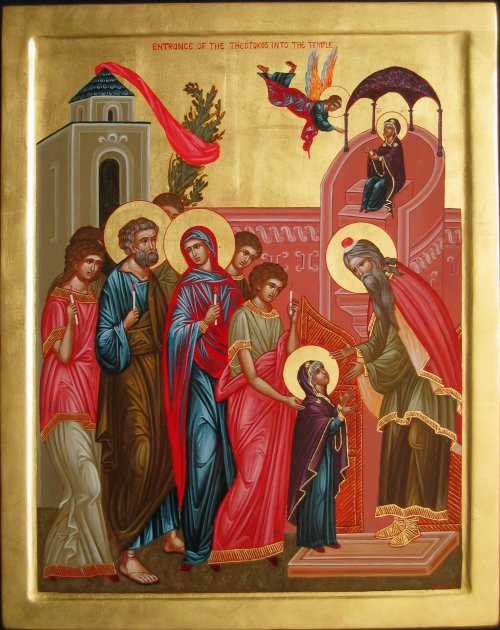
Long before most people arrive at Church, the priest prepares the Holy Gifts (the bread and wine that will be consecrated into the body and blood of Christ) in a small service called the Proskomedi. He cuts pieces of a loaf of bread called the prosphora (“before the gifts”) and places them on dish called […]
Christianity Without Pentecost
What happens when Orthodox Christian experience Ascension, but not Pentecost? by: Fr. Josiah Trenham The last ten days in the Church have been unusual. In some sense we have been living between two realities. On the leave-taking of Pascha we ceased the sustained celebration of the Holy Resurrection of the Lord as well as our […]
The Christians of Dachau
By Fr. Hans Jacobse Pascha, 2009 Every Pascha, I repost two stories on OrthodoxyToday.org. that tell how Orthodox prisoners in Dachau held the Paschal Liturgy during their liberation. The first, “The Souls of All are Aflame” provides historical background and detail. The second, “Pascha in Dachau” recounts the story of a prisoner who was there. […]
The Word ‘God,’ The Divine Names, ‘Father’ As Divine Name
The words used to refer to ‘God’ in different languages are related to various concepts. The peoples of antiquity attempted to find in their languages a word to express their notion of God or, rather, their experience of encounter with the Divinity.
In the languages of Germanic origin the word Gott comes from a verb meaning ‘to fall to the ground’, to fall in worship. This reflects an experience similar to that of St Paul, who, when illumined by God on the road to Damascus, was struck by divine light and immediately ‘fell to the ground… in fear and trembling’ (Acts 9:4-6).
Church on Sunday?
I came across this well-written, thoughtful, and thoroughly engaging article on what American Orthodoxy increasingly looks like. He looks like a regular young guy — maybe late 20s or early 30s. Head shaved to mask a receding hairline, a black goatee to offset the baldness, the gold rim of his glasses glinting beneath his dark […]
The Love of God and the Passion of Christ
On March 26, 2009, the Fellowship of St. James, publisher of Touchstone and Salvo magazines, hosted a Lenten talk by Fr. Patrick Henry Reardon, the pastor of All Saints Antiochian Orthodox Church in Chicago, Illinois, and the author of Christ in the Psalms and Christ in His Saints, both published by Conciliar Press. The title […]
Orthodox chant on PBS [AUDIO]
A small but delightful segment on Orthodox chant appears on the Religion and Ethics section of the PBS website.
Welcome to St. Peter’s
St Peter’s was given this directive from Metropolitan Philip of the Antiochian Orthodox Christian Archdiocese: “Establish a parish that will draw people who have never stepped into a church before.” It’s a worthwhile challenge, and one that can be fulfilled because many people are searching for enduring and certain truth. Truth is found in Christ. […]